Get to Know Boston Fern, a Plant That’s Always in Style
Boston ferns (Nephrolepis exaltata ‘Bostoniensis’) have been making themselves at home since they were introduced to the public in the 19th century. A staple of Victorian parlors, they remained popular as houseplants even as design styles changed over the years. They also made their way outside to grace patios, porches and decks and, in regions with the warmest winter climates, even settled in as landscape plants. They have a reputation as being fussy, but once you learn their quirks, they’re not hard to keep happy.
Modern Bedroom by China marble Jill Sorensen

Contemporary Landscape by Bethesda Garden Design llc
Bethesda Garden Design llc
Botanical name: Nephrolepis exaltata ‘Bostoniensis’
Common name: Boston fern
Origin: Central America
Where it will grow: Treat as a houseplant or summer annual in all zones; hardy in the landscape to minus 3.9 degrees Fahrenheit, or minus 6.7 degrees Celsius (USDA zones 9 to 11; find your zone)
Water requirement: Regular
Light requirement: Indirect bright light
Mature size: 1 foot to 3 feet tall and 1 foot to 4 feet wide
Benefits and tolerances: Removes air pollutants from homes and helps increase indoor humidity levels; ideal for bathrooms and kitchens
Seasonal interest: Year-round indoors; spring through fall outdoors
When to plant: spring or fall in the landscape
Contemporary Bathroom by KCreative Interiors
KCreative Interiors
Boston fern in a hanging planter is shown here with maidenhair fern (Adiantum sp.).
by Mia Mortensen Photography
Mia Mortensen Photography
Distinguishing traits. Boston fern features bright green cascading fronds and a roundish, symmetrical growth pattern. It can get quite full.
Popular cultivars include the aptly named ‘Fluffy Ruffles’, with frilly leaves. ‘Dallas’ and ‘Kimberley Queen’ can tolerate lower light and drier conditions.
How to use it. Use year-round as a houseplant in spots designed to show off its cascading fronds, such as in hanging baskets or on bookshelves or pedestals. It can be used as a landscape plant in warmer-climate zones.
Traditional Porch by Stephanie Wilson
Stephanie Wilson
During the summer, hang Boston ferns from porch rafters, set them in urns or tuck them into planters.
Traditional Living Room by China marble Theresa Fine
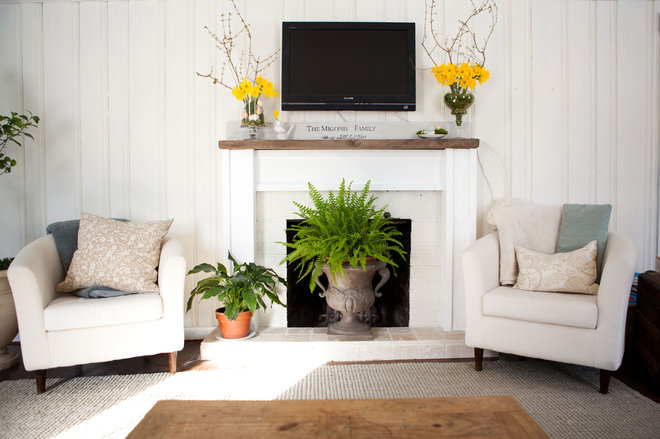
How to Grow Boston Fern Indoors
Boston ferns like cooler temperatures and higher humidity, so choose a bright spot out of direct sun and away from heat sources. Locations that get morning and afternoon sunlight are best.
Keep the soil most but not soggy. Boston ferns do best with higher humidity levels than most homes have, so set them on a tray filled with pebbles and water to increase the moisture in the air around the plant. They also do well in bathrooms and kitchens, thanks to the increased humidity levels.
Feed lightly, with about a quarter-strength water-soluble fertilizer every two to four weeks, or with a slow-release fertilizer in spring and then again six to eight weeks later. Rinse leaves with water after fertilizing so there is no residue on them.
Wash off any accumulated dust with water as well; don’t use commercial products.
Repot when the roots become overly crowded. If you want to divide plants, do so in spring.
Traditional Hall by China marble Jessica Helgerson Interior Design

Dark spots on the underside of the fronds are spores and a sign your plant is healthy, so leave them be. Keep an eye out for mealybugs, scale and spider mites.
Brown tips may be a sign of a number of problems, including poor soil, poor drainage, too much sun, too much heat, too little water and salt buildup. Improve the location as a first step in correcting these and be sure the plant is getting enough water. Fertilize if it has been several months since this was last done. If excess salt is a problem, soak the pot in water to leach out salts or repot the plant.
Yellow leaves are usually a sign of too little humidity. Add a tray with pebbles and water beneath the plant.
Old leaves will turn brown; snip these off at soil level.
Traditional Entry by China marble Significant Homes LLC
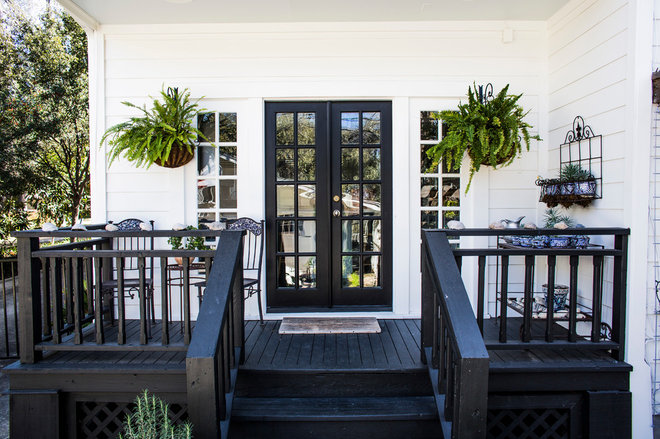
If you want to overwinter porch and patio plants without bringing them into your home, begin by pruning back the old leaves in fall. Stop any fertilizing and gradually move the plants to a cooler location with less light before settling them in a dark space. Water monthly until spring.
Outsmart Winter — Make Houseplants of Your Garden Growers
Traditional Patio by Janice Parker Landscape Architects
Janice Parker Landscape Architects
How to Grow Boston Fern in the Landscape
Boston ferns are great filler plants for gardens in warm-winter areas. Choose a spot in dappled to full shade with rich soil that is generally damp but not soggy.
Treat as you would houseplants, fertilizing occasionally and checking that they aren’t getting too hot or too much sun. Watch out for mealybugs, scale and spider mites.
Hot Products






People who liked this story also liked