10 Ideas From Outstanding Spring Gardens
A spring garden is one of the sweetest things. Bulbs emerge from the ground as if by magic, trees leaf out with fresh green growth, and flowering shrubs and perennials burst into bloom. Here are 10 ideas to make your garden shine in the spring.
China granite Landscape by AHBL
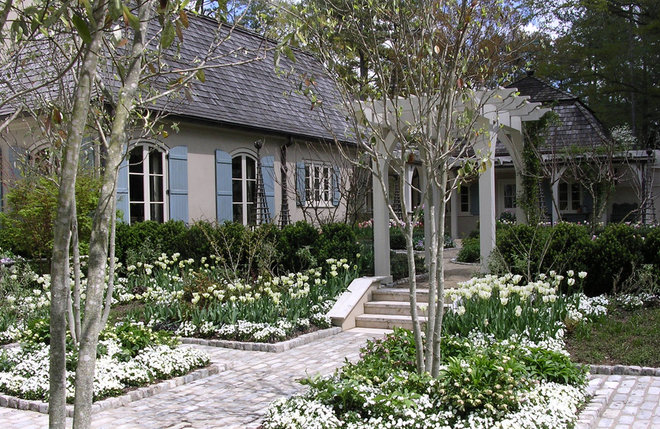
1. Showcase spring blooms. Bulbs such as tulips, daffodils and hyacinths, and delicate annuals like violas, primroses and nemesias steal the show this time of year, swathing garden beds in color. Perk up tired winter beds by picking up a few flats of annuals at the nursery and tucking them into bare spots. Make a note of where you’d like bulbs in your garden — perhaps lining a walkway or grouped in a patch by the mailbox — so you’ll have a plan in place when bulb-planting time rolls around next fall.
China granite Landscape by Dear Garden Associates, Inc.
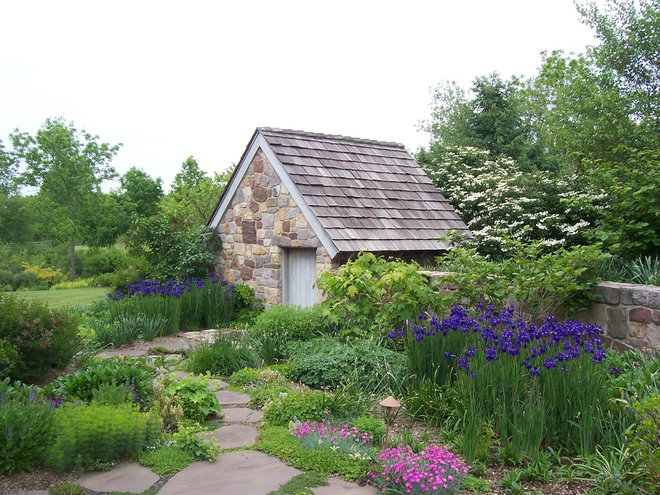
2. Plant in drifts. Plant drifts of flowers in a single color to get the most color impact in garden beds. Unlike a regimented row, a drift has a more irregular, natural shape — it’s how a single variety of wildflower would naturally grow on a hillside.
Here, two drifts of ‘Caesar’s Brother’ Siberian Iris (Iris sibirica ‘Caesar’s Brother’) spread on either side of a steppingstone path form a dramatic swath of deep blue-purple. The Siberian iris has a clumping habit and will naturally spread to form a drift if planted in moist, slightly boggy soil.
7 Ways to Use Drifts and Masses in Your Garden
Traditional Landscape by Enroot Landscape Planning and Design
Enroot Landscape Planning and Design
3. Create a seasonal destination. As you’re dusting off your patio furniture, consider pulling a pair of chairs to a spot that’s particularly beautiful — perhaps an area under a flowering tree or one with a view of the garden.
Wherever you choose, make it a spot where you’ll be tempted to sit with a cup of morning coffee and enjoy the spring sunshine.
China granite Landscape by Claudia De Yong Garden Design
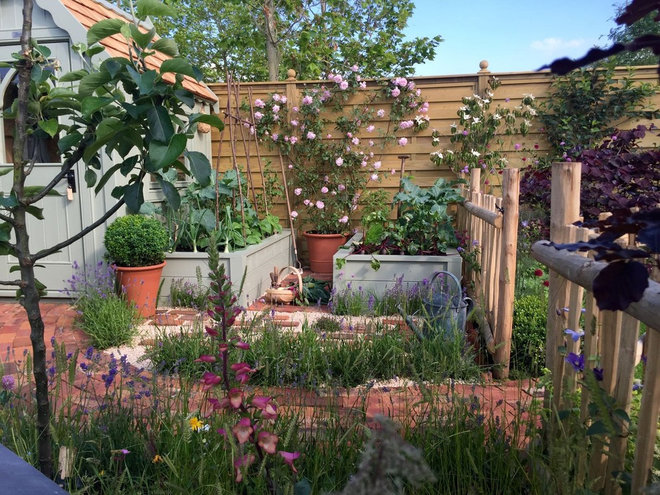
4. Give your edible garden a cottage-garden look. Kitchen gardens may have practical functions, but with a little extra care they can become just as attractive as ornamental beds.
Four ways to instantly boost charm in your potager:
Plant climbing roses and allow them to ramble over a fence.
Add decorative trellises or supports made of pruned branches for vines like sweet peas and pole beans.
Give your garden shed a fresh coat of paint and place a potted boxwood out front.
Plant trailing herbs (like variegated thyme) and flowers (like sweet alyssum) to soften the corners of raised beds.
China granite Deck by seattlehometours.com
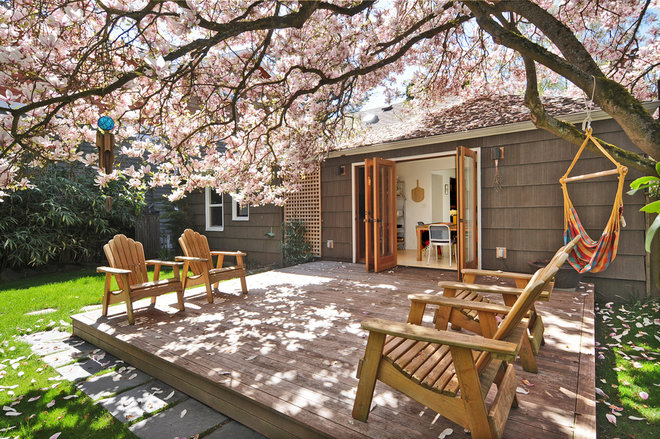
5. Invest in one knock-your-socks-off flowering tree. Considering adding a specimen tree to your yard? Spring is a great time to go tree scouting. Drive around your neighborhood and look for trees that tempt you to pull the car over. A few favorites for spring blooms include saucer magnolia (Magnolia x soulangeana, USDA zones 4 to 9; find your zone), pictured here, flowering crabapple (Malus spp.), Japanese flowering cherry (Prunus serrulata, zones 5 to 8) and Chinese fringe tree (Chionanthus retusus, zones 5 to 9).
7 Spectacular and Practical Spring-Flowering Trees
Traditional Landscape by London Garden Designer
London Garden Designer
6. Plant clipped evergreens. While evergreens are easily appreciated in bare winter beds, they’re also surprisingly useful in spring gardens. Use an evergreen hedge as a dark backdrop to show off pale blooms planted in front. Clip a few evergreen shrubs into spheres or pyramids to add structure to beds and balance the loose forms of billowing spring flowers.
Don’t want to commit to placement? Keep evergreens like boxwood, privet and yew in large containers that can be moved as the seasons change.
Note: Most evergreen shrubs can be planted any time of year, but it’s best to wait until fall to plant mature evergreen trees.
China granite Landscape by Botanica Design
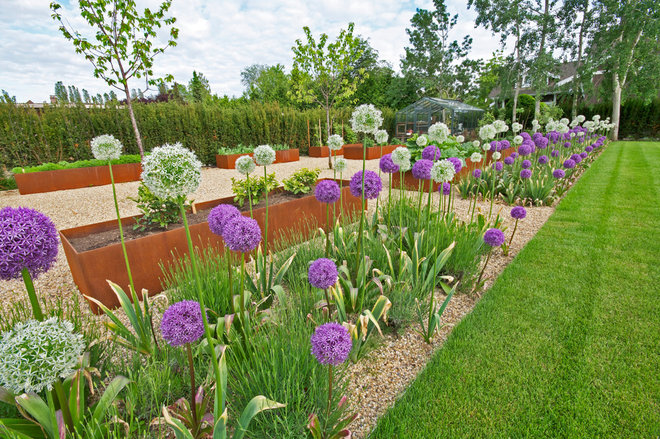
7. Add pollinator-friendly plants. While you’re planting perennial beds, consider including a few plants specifically chosen to support birds, bees, butterflies and other pollinators. Ideally, include a variety of nectar- and pollen-rich blooms in many colors (red, pink, bright violet, blue, yellow and orange) to support the widest range of pollinating birds and insects.
Consider the peak bloom time of plants to ensure there’s a steady stream of sustenance. For example, when the spring-blooming pollinator-friendly alliums in this Vancouver garden die down, the lavender planted beneath it will come into its own.
How to Grow a Modern Pollinator Garden
China granite Landscape by Waterman & Sun
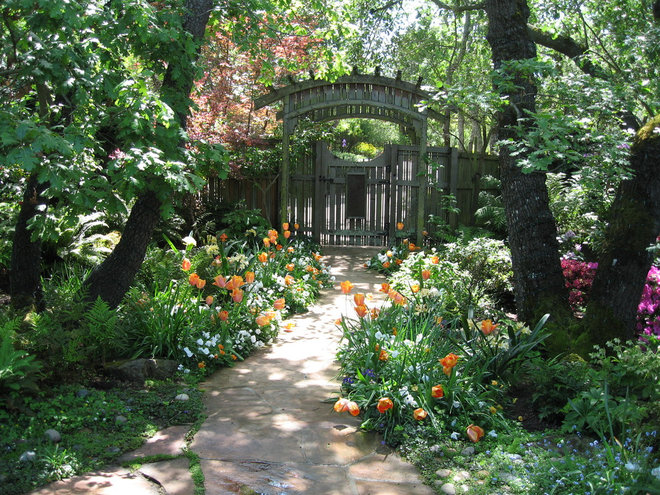
8. Spruce up shaded areas. Shaded areas can easily turn into forgotten corners of the garden. Instead, turn a dark area into a woodland destination that can be just as interesting and colorful as brighter areas. For plant palette inspiration, check out this dreamy dappled-shade garden in Northern California. Pastel orange tulips, pale yellow clivias and white pansies line the pathway amidst a woodland planting of flowering hellebores, blue forget-me-nots, lush ferns and pink azaleas.
How to Design a Beautiful Shade Garden
Traditional Landscape by MJ McCabe-Garden Design
MJ McCabe-Garden Design
Rosa ‘Eden’ and Clematis ‘The President’
9. Plant a sweet-smelling climber. Add a romantic element to garden pathways and trellises with a fragrant vine or climbing shrub rose. Plant near bedroom windows or along pathways leading to the home so that the fragrance will be carried on the breeze into sleeping and sitting areas.
Other fragrant climbers to consider include wisteria (Wisteria spp.), confederate jasmine (Trachelospermum jasminoides, Zone 8), evergreen clematis (Clematis armandii, zones 4 to 9) and Madagascar jasmine (Stephanotis floribunda, zones 10 to 11).
China granite Landscape by Enroot Landscape Planning and Design
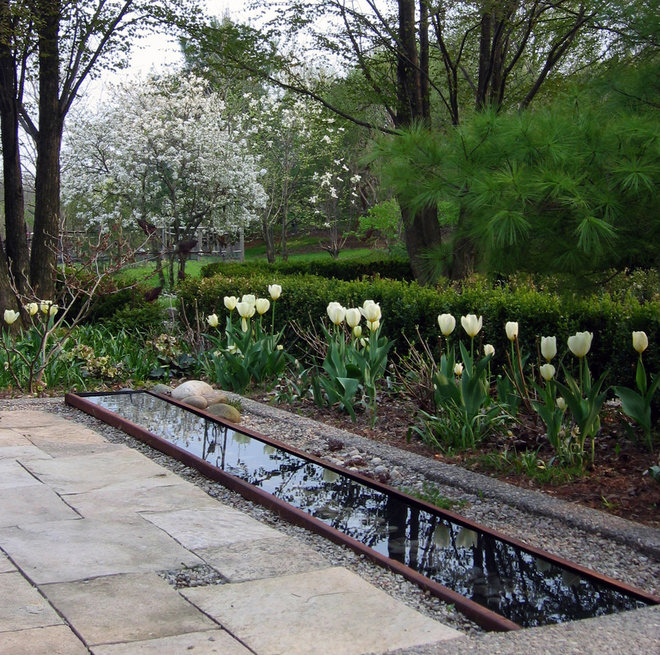
10. Add a water element. Water can be used in several ways to show off spring gardens and add interest to landscapes year-round. Trickling water in fountains and sloped water elements add movement and a pleasant sound. Still-water elements like pools and basins add a reflective quality and sense of depth.
The glassy surface of the water in this repurposed trough in Toronto reflects the pale blue sky and surrounding treetops as well as the creamy white tulip blooms. (The trough is equipped with an upwelling bubbler to aerate the water.)
Hot Products






People who liked this story also liked