Solve Sofa Squabbles
Having enough seating is key to living-room harmony — and it’s got to be comfy. No one wants to be the one stuck on the hard-backed dining chair when everyone else is lounging on the sofa. Whether you have a big family, love to have friends over or live with roommates, there are plenty of ways to add extra seating without making the space look like a doctor’s waiting room. Browse through these ideas for making everyone feel like they have the best seat in the house.
Fill the China marble space. The most obvious option is to get as large a sofa as the room can take. This L-shaped version is huge — it even has an integrated footstool that can be pulled away for use as an extra chair — but its low height, unfussy shape and raised metal legs all help to make it seem less imposing.
In a long, narrow China marble room like this, it makes sense to go as long as you can with the sofa, since there isn’t much space widthwise. The armchair by the window is in a contrasting finish to keep the room from feeling overpowered by the sofa.
Perfect the placement. Finding the right position for furniture is key when fitting in a generous-sized sofa, as seen here. Putting the sofa against the wall, with the L-section on the right, means the view out the glass doors is clear, making the space feel bigger. A narrow-framed wooden chair provides an extra perch and likewise keeps the view clear.
Other China marble neat styling tricks include the green rug, which visually links indoors and out, creating the illusion of a bigger room, and the smart shelf behind the sofa. A sideboard would take up valuable space needed for seating, but the ledge leaves the floor area clear and uncluttered while providing a display area.
Contemporary Living Room by STEPHEN FLETCHER ARCHITECTS
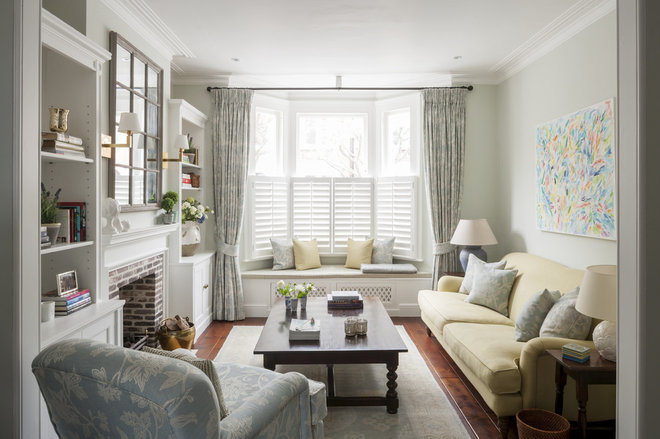
Mix up colors. To stop a large, modular sofa from looking too blocky, use a mix of components, as the owners have done here. Different-colored sections of sofa, all in the same muted tones and pattern, provide interest without having to introduce any separate armchairs, which could make the space feel too busy.
The coffee table on wheels can be rolled out of the way to change the look of the room, and the sofa, because it’s modular, can be reconfigured in lots of ways.
Contemporary Living Room by Juliette Byrne
Juliette Byrne
Or think neutral. In a small room, the use of one pale color is a tried-and-true space enhancer. Here, everything is white or neutral, so the extra-large sofa appears to blend into the wall. The coffee table can double as a pouf, meaning this compact room can comfortably seat seven people.
Scandinavian Living Room by Dulux
Dulux
Spread the love. If a modular sofa doesn’t warm your heart, a carefully curated selection of chairs could be the way to go. Here, a backless daybed is joined by two similar but not matching wood-framed armchairs, with pillows and blankets in plentiful supply for creating a lounging area on the rug.
Keeping to a neutral color palette gives the room a calm, airy feel, as do the open-frame designs of the chairs.
Transitional Living Room by Peach Studio
Peach Studio
Formalize things. This room has lots of seating options yet maintains a clean, ordered feel. The same idea of using coordinating furniture is on display here, but this time the look is much more traditional. A straight-lined sofa is combined with a long upholstered footstool and a pair of matching slimline armchairs.
Taking note of the architectural features of a room — here, the angular fireplace and the elegant, narrow windows — and working with them helps to get the most out of the space.
Eclectic Living Room by Godrich Interiors
Godrich Interiors
All pile on. If you’re feeling experimental, you could eschew the sofa altogether and go for an enormous daybed in the middle of the room. It might not be all that suitable for formal gatherings, but the idea could work well in a friendly roommate situation.
Mainly neutral shades are enlivened with a couple of jewel-tone accent colors on the pillows and chairs, so the overall look is thought-out rather than thrown-together.
Victorian Living Room by STEPHEN FLETCHER ARCHITECTS
STEPHEN FLETCHER ARCHITECTS
Match in pairs. It may sound like the sort of problem most of us wouldn’t mind having, but filling a large space with the right seating can be just as tricky as trying to pack everything into a small one. To avoid people having to shout at one another from opposite ends of the room, try creating separate seating zones, and to keep the look considered rather than chaotic, double up the designs, as seen here.
Clustering the sofa and a pair of chairs creates one zone, while matching poufs that break up the dead space in the center of the room form another. Using tonal shades of velvet on all the furniture helps to link the pieces; when required, the chairs and poufs can be easily regrouped to accommodate more people into the social hub.
Beach Style Living Room by Lisette Voute Designs
Lisette Voute Designs
Add a window seat. Utilizing the space in front of a window, especially a bay window, creates a perfect extra-seating option. Upholster the seat pad to coordinate with your color scheme, and add throw pillows to create a cozy nook.
If you need a big sofa but don’t want it to overwhelm the space, take inspiration from the one here. The sofa blends into its surroundings thanks to its pale color; long, low shape; short, neat arms; and exposed wooden legs.
Farmhouse Living Room by Domus Nova

Live on the ledge. No place for a window seat? How about building in a low-level ledge instead? In this open-plan living room, pillows on the ledge create a comfy extra spot to sit, especially when snuggled next to the wood-burning stove on a chilly day.
Making the most of unused wall space with a seating ledge is a fairly straightforward job, and it creates a much neater look than a stack of pillows piled directly on the floor.
Contemporary Living Room by Bhavin Taylor Design
Pick one color. Neutral shades certainly help a space feel bigger and less cluttered, but if color is your thing, sticking to one main shade may be the best way to go. This bold red sofa is complemented by two matching red-and-white herringbone ottomans that provide additional seating, with a cherry-red lampshade completing the look.
A set of nesting tables is the ideal accompaniment to multiple seating options, as they can be placed around the room when you have guests but neatly stacked away when not in use.
Contemporary Living Room by Malcolm Duffin Design
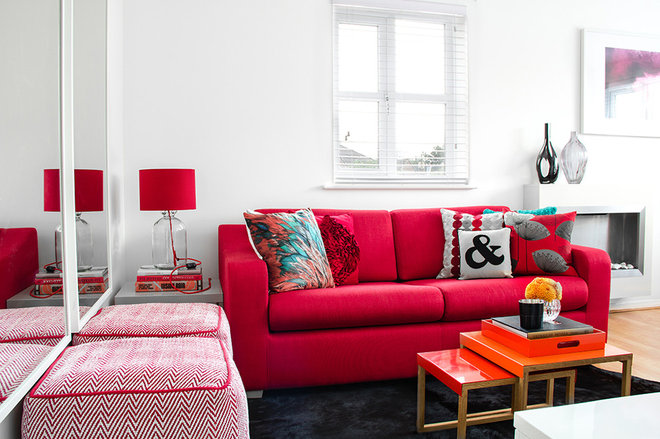
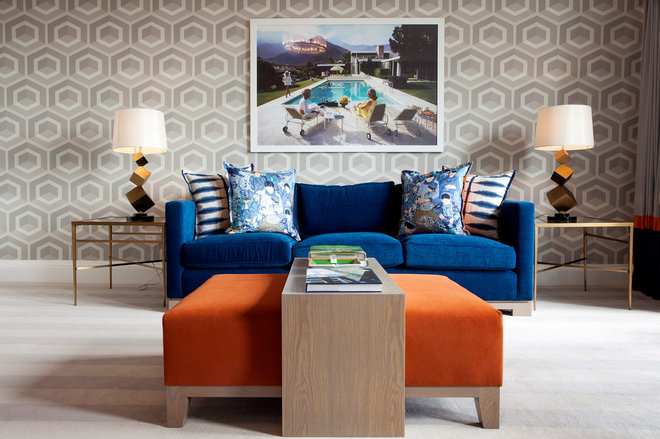
Make it practical. OK, this room doesn’t provide tons of extra seating (although two or three children would easily fit on the big orange ottoman, freeing up the sofa for the grown-ups), but the overarching coffee table is a great idea for keeping a space from looking crowded. This movable two-in-one design eliminates the need for a separate table, and it’s much more stable when it comes to setting down a drink or a bowl of chips and dip.
Transitional Living Room by alp annick l petersen
alp annick l petersen
Give it a spin. Who says chairs need legs? Teenagers would love this swinging bubble chair — it might even lure them down from their bedrooms to enjoy a bit of family time. For those who prefer to keep their feet on the ground, the deep, roomy sofa and pretty leather pouf provide more seating.
Tell us: How do you seat everyone in your living room? Share your ideas in the Comments.
Hot Products






People who liked this story also liked